
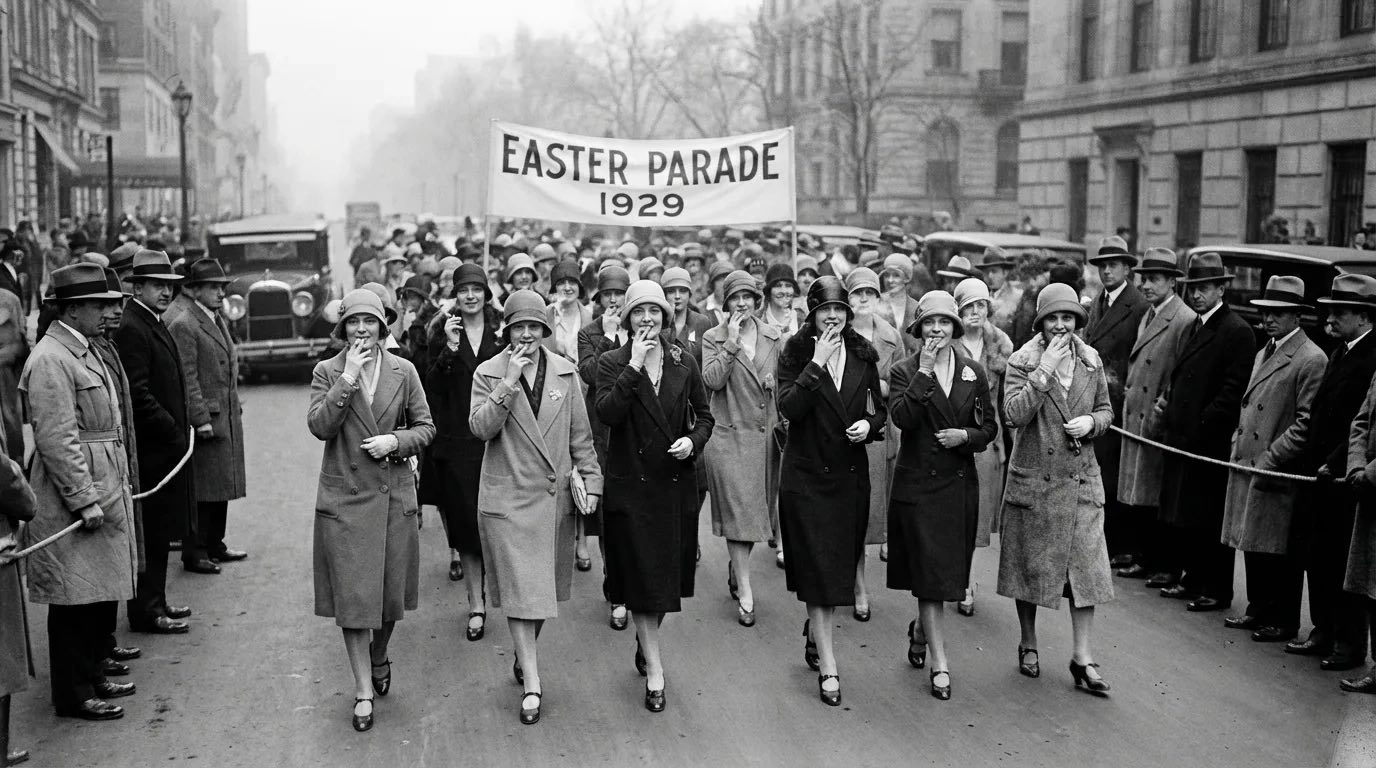
How the Easter Parade Never Ended
- Martin Enlund
- 12/12/25
Using words to influence behaviour is not a new phenomenon. However, the scale, speed, and precision with which language can be used as a weapon IS new. Today, researchers using AI wish to use “well-formed linguistic input” to cure depression. But an algorithm that can formulate a cure can, just as easily, formulate a poison.
How the Easter Parade Never Ended
- Martin Enlund
- 12/12/25
Using words to influence behaviour is not a new phenomenon. However, the scale, speed, and precision with which language can be used as a weapon IS new. Today, researchers using AI wish to use “well-formed linguistic input” to cure depression. But an algorithm that can formulates a cure can, just as easily, formulate a poison.


Chat Control 2: Digitalizing the Panopticon
- Martin Enlund
- 9/20/25
Europe’s assault on free speech has become widespread and far-reaching. In Germany, a journalist was fined and given a suspended prison sentence this spring for circulating a satirical image of the interior minister captioned “I hate free speech.”


The Superstimulus Trap: From Bird Eggs to AI
- Martin Enlund
- 3/2/25
With the rapid development of artificial intelligence (AI), we face a future where we may soon have access to almost everything we desire – at least in the digital realm. But unfortunately, what we wish for doesn’t always align with what we truly need, or what would benefit us.


Trust - best built on solid ground
- Martin Enlund
- 11/6/24
TL;DR: J.D. Vance recently observed that many in the Democratic Party are attempting to manufacture trust from the top down, neglecting the fact that genuine trust is often born from grassroots connections. There’s indeed a stark contrast between trust that’s artificially constructed through manipulation and censorship, and trust that’s organically cultivated from the ground up.

AI as magic goggles
- Martin Enlund
- 10/24/24
Navigating today’s complex information landscape can be a daunting task. Algorithms, bot armies, censorship authorities, and trolls contribute to a thick fog of disinformation, reminiscent of the industrial smog that once shrouded the Ruhr Valley in Germany. Many fear that AI technology will exacerbate the problem.

Nothing new under the sun
- Martin Enlund
- 9/2/24
The ongoing debate surrounding freedom of expression may revolve more around determining who gets to control the dissemination of information rather than any claimed notion of safeguarding democracy. Similarities can be identified from 500 years ago, following the invention of the printing press.