Articles
- Home /
- Articles
When Control Becomes Pathological
- Martin Enlund
- 2/10/25
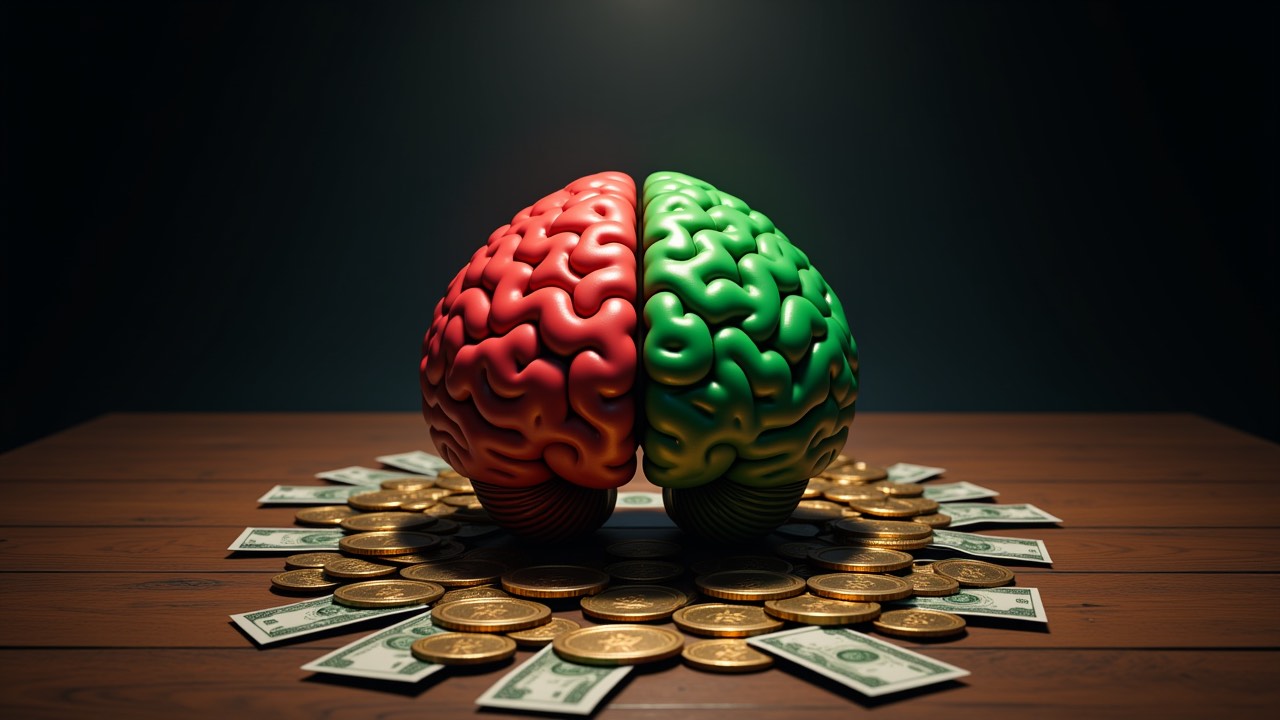
The risks associated with cryptocurrencies have recently received attention in the media, where e.g. the Swedish Financial Supervisory Authority warns of the high volatility and risk of investments in crypto. Within the EU, as usual, significant efforts are being made to expand the already extensive regulatory framework. Meanwhile, in the US, there has been a marked turnaround. Even the presidential family has launched their own cryptocurrencies, resulting in criticism from industry experts .

You can't have your cake and eat it too
- Martin Enlund
- 1/18/25
Preparedness is a hot topic these days. In Europe, Poland has recently introduced compulsory lessons in weapons handling for schoolchildren for war-preparedness purposes. In Sweden, the Swedish Civil Contingencies Agency (MSB) has recently published the brochure “If crisis or war comes”.


On Car Seats and Censorship
- Martin Enlund
- 12/27/24
Fertility rates in Western countries have fallen to historically low levels in recent years - not a single Western country had a fertility rate above the replacement rate in 2023. The replacement rate being 2.1 children per woman. The driving forces are said to be several, such as better pension systems, increased demands for education, more women in the workforce, the fiat monetary system, and so on. However, it can be argued that the driving forces are rather few. Perhaps many can be summarized with the concept of “unpredictable consequences”. For who were those who, in their time, predicted that a more generous pension system, more years in school, or more women in the workforce would lead to a veritable collapse in birth rates?


What if the Green Facts Don't Add Up?
- Martin Enlund
- 12/22/24
Beneath the green rhetoric: A worrying picture is emerging, revealing that the EU’s green agenda may be stifling economic growth, compromising security, and undermining preparedness. Is the EU really in a position to afford the luxury of prioritising green ideals over the essential needs of its citizens’ economic well-being and national security?

No Green Future without Economic Prosperity
- Martin Enlund
- 12/19/24
Germany, the EU’s largest economy, is once again forced to bear the label “Europe’s sick man”. The economic news makes for dismal reading. Industrial production has been trending downward for a long time. Energy-intensive production has decreased by as much as 20% in just a few years. Volkswagen is closing factories. Thyssenkrupp is laying off employees and more than three million pensioners are at risk of poverty according to a study.
The Thin Veneer
- Martin Enlund
- 12/6/24
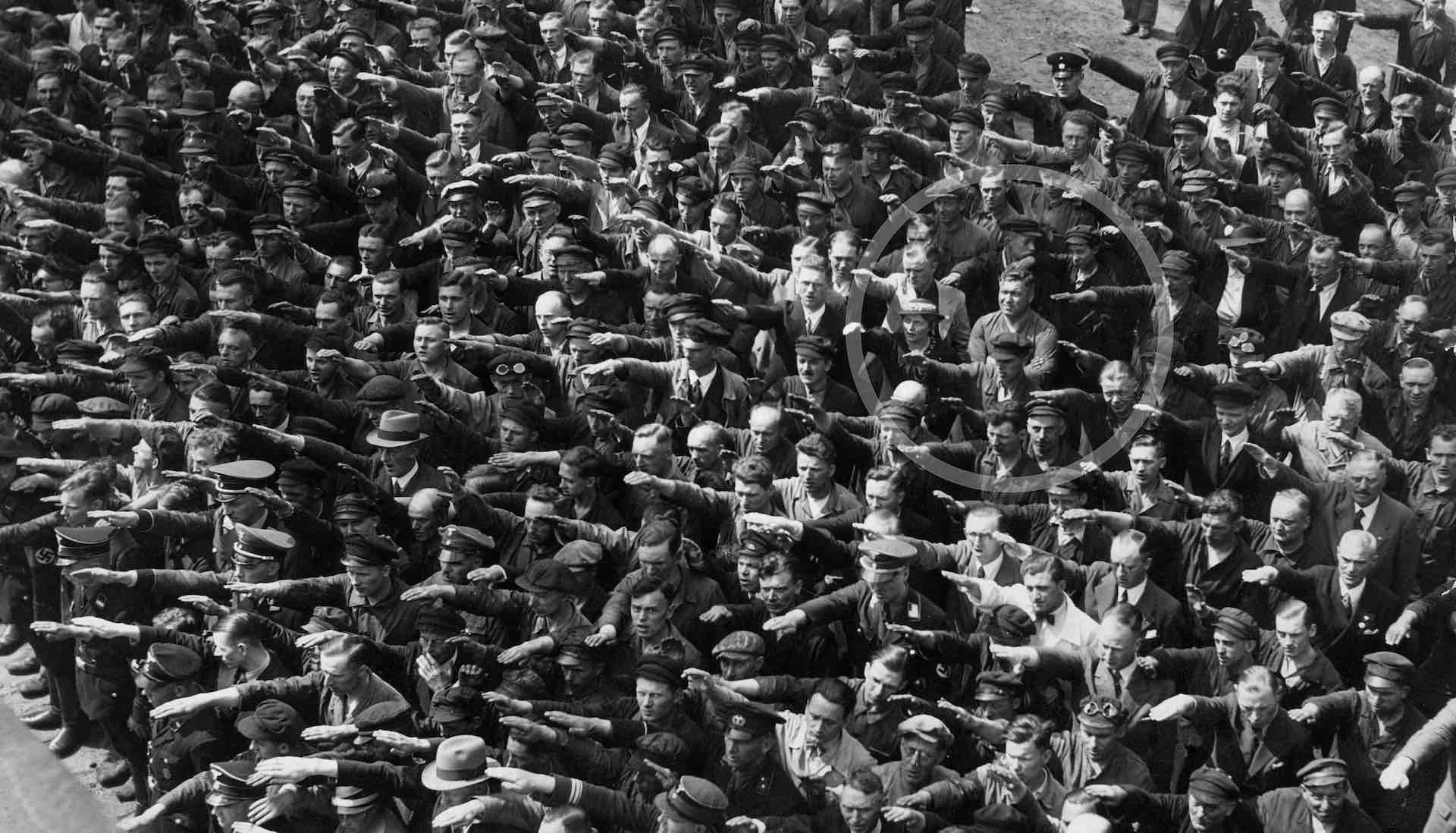
The Dutch primatologist Frans de Waal coined the term “veneer theory” in his book “Our Inner Ape” in 2005. The veneer theory posits that human moral behavior is merely a thin veneer over an inherently unpleasant nature. This viewpoint can be traced back to Thomas Henry Huxley, an anthropologist and biologist who was a contemporary of Darwin. However, de Waal criticized the idea because humanity is far more cooperative than predicted by simple anthropological or economic models. However, it is possible to question how thick this “civilizing veneer” really is.


Lost in the Haze: The Sense-Making Crisis
- Martin Enlund
- 11/19/24
Imagine a world where the very foundations of knowledge are in question. Where experts disagree on the most basic facts, and the public is left to navigate a sea of conflicting information. Welcome to our reality, where the process of knowledge creation has become unhinged. We’re facing numerous major challenges, from pandemics to climate threats, migration flows, and rapid technological development, such as Artificial Intelligence (AI). But beneath these surface-level issues lies a more profound problem: the mechanisms by which we produce, disseminate, and consume information have been severely disrupted, leading to a crisis of trust in the very foundations of knowledge itself.

Trust - best built on solid ground
- Martin Enlund
- 11/6/24
TL;DR: J.D. Vance recently observed that many in the Democratic Party are attempting to manufacture trust from the top down, neglecting the fact that genuine trust is often born from grassroots connections. There’s indeed a stark contrast between trust that’s artificially constructed through manipulation and censorship, and trust that’s organically cultivated from the ground up.

Technology that protects
- Martin Enlund
- 10/29/24
The Swedish government recently rejected the Transport Administration’s proposal for average speed cameras. The proposal would have meant constant surveillance of all vehicles, and critics argued for instance that it would have posed a threat to national security. Given the prevalence of IT breaches and data leaks today, it’s hard not to give them a point, even if the problems are often downplayed by both corporations, governments and organisations. After Facebook (now Meta) leaked account information for over half a billion users, internal mails revealed the company wanted to “normalise the fact that this happens regularly”.
Tags
- Ai
- Aml
- Art
- Australia
- Bank of Canada
- Banks
- Bayes
- Behavioural Bias
- Bertrand Russel
- Biodiversity
- Bis
- Bitcoin
- Bureaucracy
- Canada
- Car Safety
- Cash
- Cat Theory
- Catastrophes
- Cbdc
- Cbdcs
- Censorship
- Central Banks
- Centralisation
- Centralization
- Chat Control
- Chat Control 2
- China
- Christine Lagarde
- Civilisation
- Climate Change
- Common Knowledge
- Competitiveness
- Complexity
- Compliance
- Contract Theory
- Control
- Counterfeiting
- Covid-19
- Critical Thinking
- Crowdstrike
- Crypto
- Crypto Currencies
- Cryptography
- Csam
- Cyber Security
- Cybersecurity
- Data Leaks
- Data Ownership
- Decentralisation
- Democracy
- Deng Xiaoping
- Digital Id
- Dignity
- Disinformation
- Disintermediated
- Donald Trump
- Ecb
- Economics
- Elections
- Elon Musk
- Energy
- Environment
- Epistemology
- Ethereum
- Ethology
- Eu
- Eula
- European Union
- Evolutionary Biology
- Experts
- False Dichotomies
- Fatf
- Federal Reserve
- Fertility
- Food Supply
- Freedom
- Freedom of Reach
- Freedom of Speech
- Freedoms
- Game Theory
- Gaslighting
- Gaza
- Gellman-Amnesia
- Genocide
- George W. Bush
- Germany
- Globalisation
- Globalism
- Gold
- Great Reset
- Green New Deal
- Growth
- Gutenberg
- Hegel
- Human Rights
- Humanity
- Hunter Biden
- Iain Mcgilchrist
- Imperial Boomerang
- Inflation
- Information Commons
- Information Topology
- Ingrid Bergman
- Intermediated
- Iran
- IT-Security
- J.d. Vance
- J.p. Morgan
- Janet Yellen
- Journalism
- Karl Marx
- Keynesianism
- Kyc
- Language
- Legitimacy
- Liberalism
- Linguistics
- Lobbyism
- Localisation
- Mao Zedong
- Mark Carney
- Market Efficiency
- Media
- Media Bias
- Media Topology
- Misinformation
- Moderation
- Monetary Policy
- Money
- Morality
- Neofeudalism
- Nft
- Ngos
- Niko Tinbergen
- Northvolt
- Ontology
- Openai
- Paywall
- Peace Prize
- Persuasion
- Philosophy
- Polarization
- Policing
- Policy-Making
- Politics
- Postmodernism
- Poverty Politics
- Preparedness
- Printing Press
- Progress
- Propaganda
- Regulation
- Regulations
- Renaissance
- Riksbank
- Russia
- Science
- Scotland
- Search Engines
- Sense-Making
- Sensemaking
- Simon Kuznets
- Social Media
- Society
- Sovereignty
- Soviet Union
- Statistics
- Surveillance
- Sweden
- Tariffs
- Technology
- Terror
- Terrorism
- The Laptop From Hell
- Tiktok
- Trade
- Trust
- Ukraine
- United Kingdom
- United Nations
- United States
- Usa
- Veneer Theory
- Von Der Leyen
- War
- War Crime
- Waterwheel
- Who
- Wittgenstein
- Yield Curve